As the call to prayer signals sunset in Indonesia’s Aceh province, Rauzah lays out a modest iftar meal inside the orange relief tent that has been her family’s home for nearly three months.
Before last year’s monsoon floods, the mother of four would prepare a feast to break the Ramadan fast. Now, vegetables and prawns shared on a thin carpet spread over cardboard flooring mark the occasion.
Rauzah is among roughly 26,000 people still displaced after unusually intense rains in November and December triggered landslides and flash floods across Sumatra. More than 1,200 people were killed across three provinces, with Aceh accounting for the majority of the dead. Nearly 140 others remain missing, according to Indonesia’s disaster agency.
“I still feel traumatised,” said the 42-year-old. “Whenever it rains, I get anxious. I keep thinking about the children, about how I would save them.”
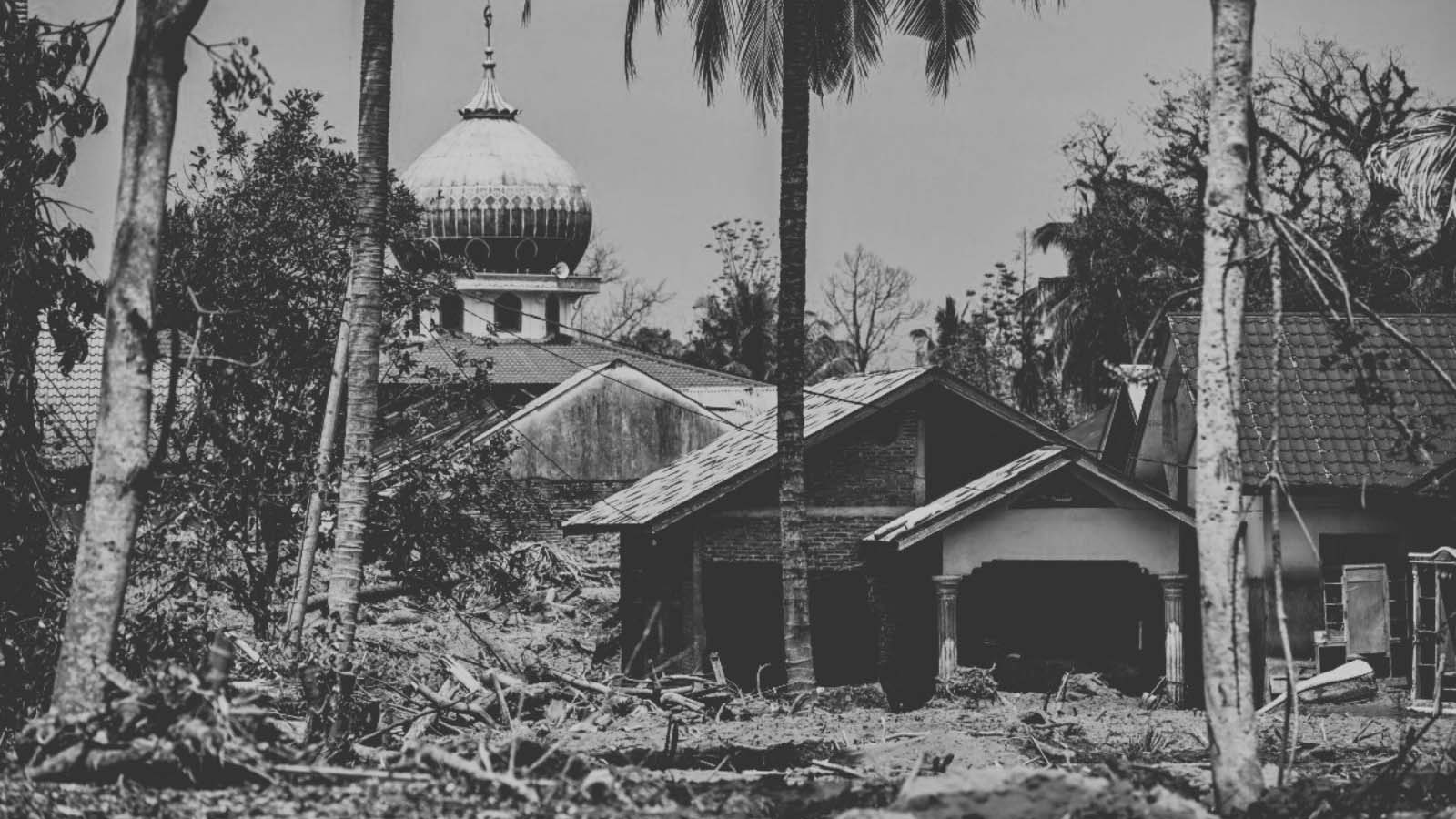
In Pidie Jaya district, where her village was engulfed in mud, little visible progress has been made. Homes remain buried. Streets are coated in dried silt. Survivors say the landscape still resembles the immediate aftermath of the disaster.
Frustration is mounting over what many describe as a sluggish government response. President Prabowo Subianto has declined to declare a national disaster — a move that would unlock additional emergency funds — and has rejected offers of international assistance, stating the situation is “under control.”
Reconstruction costs are estimated at more than 51.8 trillion rupiah (about $3.1 billion). Yet progress has been uneven. Home Minister Tito Karnavian told lawmakers that only 8,300 of the planned 16,688 temporary shelters have been completed. Fewer than 10 percent of the promised 16,300 permanent homes have been built.
In the provincial capital Banda Aceh, student and civil society groups have protested outside the local parliament, urging Jakarta to mobilise more resources. Many in Aceh recall that international aid was crucial in rebuilding the province after the 2004 Indian Ocean tsunami, which killed more than 170,000 people locally.
The memory of that catastrophe — and the reconstruction that followed — shapes expectations today. But it also underscores lingering mistrust toward central authorities.
Imam Fakhri, a local religious leader, said government-backed food provisions stopped shortly before Ramadan began. With rice fields destroyed and livelihoods disrupted, many families now depend almost entirely on charity.
“Many people are out of work,” he said. “We rely solely on charity.”
Inside a temporary housing warehouse in Pidie Jaya, Reni and her two teenage daughters occupy a narrow partitioned space. Their home was partially swept away. She says officials had promised a cafeteria and a daily living allowance of 15,000 rupiah (less than one dollar). Neither materialised.
“We’re grateful to have a place like this,” she said. “But if you can’t provide it, don’t give us hope.”
She worries about what will happen when a three-month electricity subsidy ends. Mud still fills her village, and rebuilding appears distant.
For Rauzah, Ramadan brings reflection and uncertainty. The tent offers safety from the rain, but little comfort in the tropical heat. Sleep is scarce. The future unclear.
“This is our fate as Acehnese,” Imam Fakhri said quietly. “For now, we simply make the most of what little we have.”