
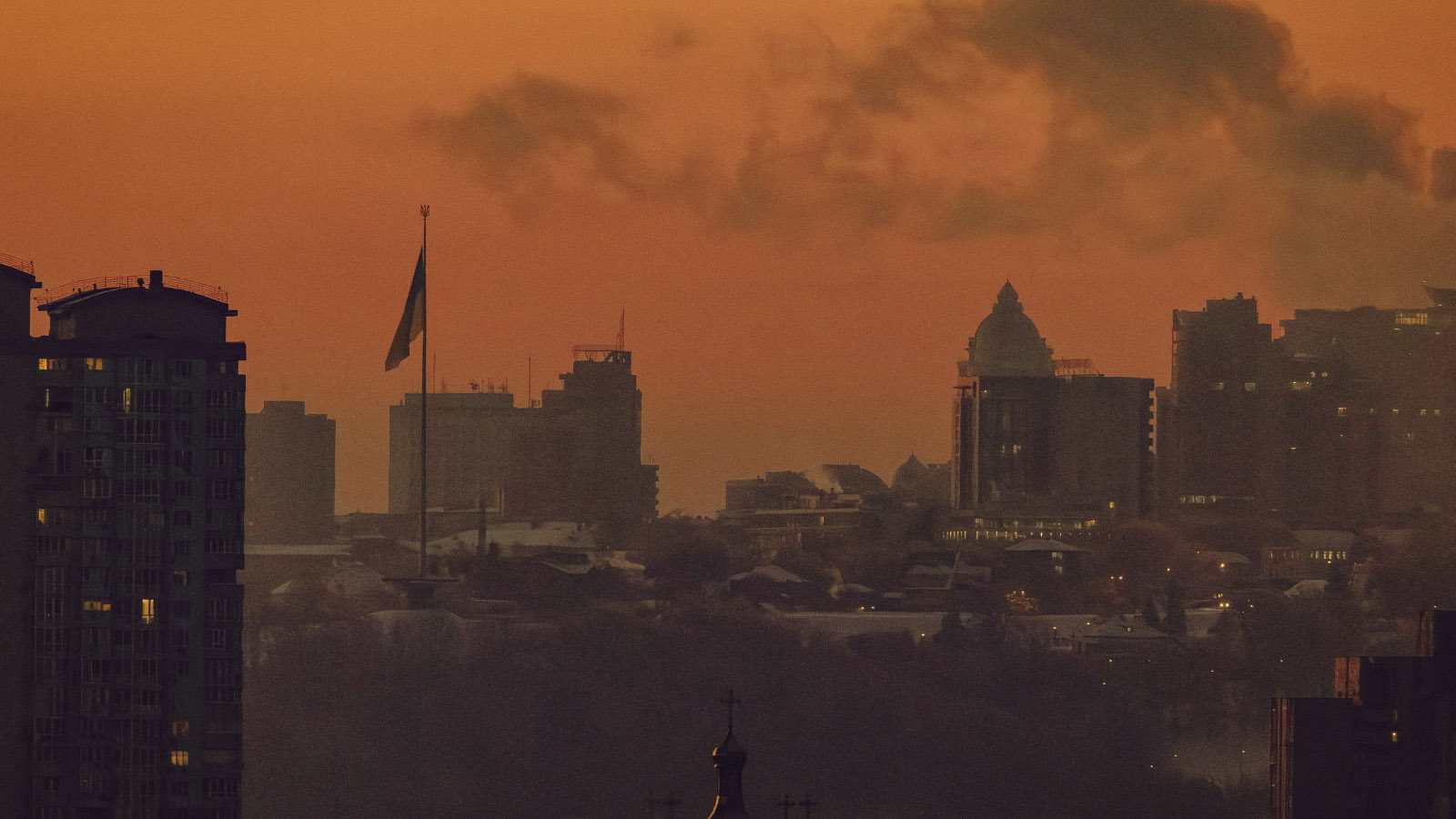
Ukraine’s economy is facing its most severe downturn since the first year of Russia’s full-scale invasion, as sustained air strikes on power infrastructure leave industry grappling with chronic electricity shortages.
As the war enters its fifth year, blackouts and emergency power cuts are rippling through heavy industry, construction, mining and food production. Executives at major firms say production has been scaled back sharply, costs have surged and supply chains are increasingly disrupted.
Sergii Pylypenko, chief executive of Kovalska Group, the country’s largest producer of concrete and building materials, said emergency outages have become routine.
“For more than two months now, we have been working under emergency power cuts without any predictable schedule,” he said, adding that unstable supply can slash production volumes by up to 50 percent during peak disruptions.
Ukraine’s economy contracted by nearly 30 percent in 2022, the first year of the invasion. Although modest growth returned in subsequent years, output remains well below pre-war levels and heavily dependent on state spending and foreign assistance. Nearly six million people have left the country, while more than three million remain internally displaced.
In February, the monthly business activity recovery index compiled by Kyiv’s Institute for Economic Research turned negative for the first time since 2023, signalling a renewed contraction in corporate performance.
Energy deficits lie at the centre of the crisis. Economist Nataliia Kolesnichenko said demand exceeded supply by roughly 30 percent in January and February. Energy Minister Denys Shmyhal reported that peak demand reached 16.4 gigawatts in mid-February, far above the 12.3 gigawatts the country could generate domestically. Ukraine has been importing nearly 2 gigawatts at peak times.
Industrial giants are feeling the impact. Oleksandr Myronenko, chief operating officer of Metinvest — controlled by businessman Rinat Akhmetov — said prolonged outages complicate efforts to restart blast furnaces and rolling mills after shutdowns triggered by Russian strikes. The company had forecast growth this year but fell short in the first two months due to power disruptions and damage to transport infrastructure.
Global steelmaker ArcelorMittal said electricity shortages cut around 10 percent of its hot metal output and more than a quarter of finished rolled products in January. One continuous casting machine was suspended to avoid emergency shutdowns and equipment damage.
Economists warn that lower output, higher costs and longer delivery times will further erode competitiveness and fuel inflation, currently around seven percent. Ukraine’s central bank has trimmed its growth forecast for this year to 1.8 percent, while private analysts are more cautious. Dragon Capital projects growth of one percent, and ICU, a Kyiv-based investment bank, expects just 0.8 percent.
The fiscal impact is also mounting. Prime Minister Yulia Svyrydenko said the energy crisis cost the state budget about 12 billion hryvnias ($280 million) in lost customs and tax revenue in January alone. Public debt has climbed to nearly 100 percent of gross domestic product, unsettling investors. Ukrainian bond prices slipped last week amid stalled peace talks in Geneva.
External financing remains critical. Kyiv is seeking approval of a new $8.1 billion programme from the International Monetary Fund, which could unlock broader European Union support worth up to €90 billion over two years. However, political resistance — particularly from Hungary — threatens to complicate that assistance.
In the meantime, businesses continue investing in generators, batteries and alternative energy solutions. Yet a recent survey by the European Business Association found that four out of five companies are struggling with outages; half have reduced output, and most report rising costs.
For Ukraine, economic resilience is more than a domestic concern. Industry supplies tax revenues, arms production and employment for soldiers and refugees returning from abroad. As the power crisis deepens, sustaining that resilience has become as urgent as the military fight on the front line.