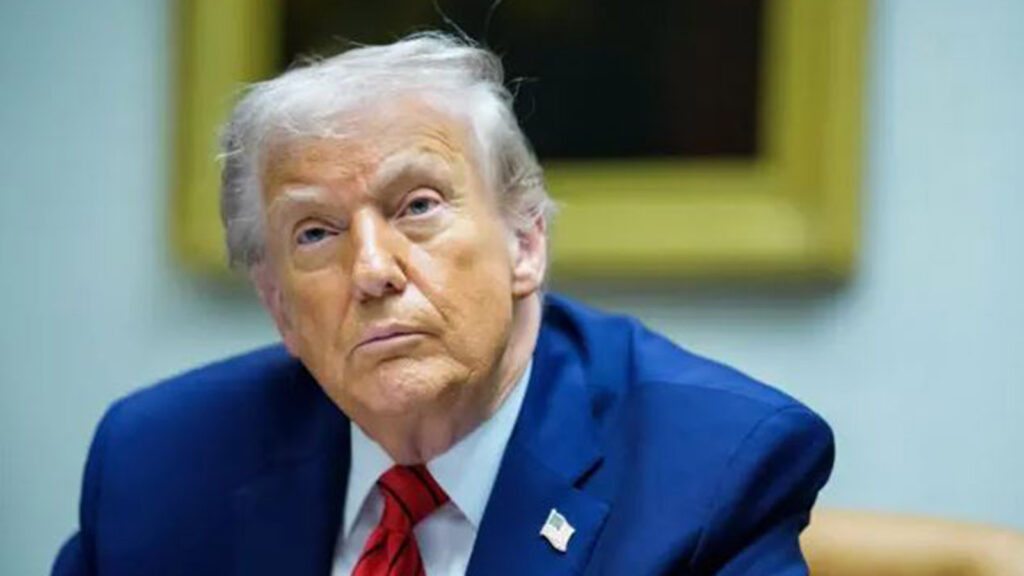
Senior members of President Donald Trump’s administration intensified warnings about Iran on Wednesday, framing Tehran as a direct and growing threat to the United States on the eve of renewed nuclear negotiations in Geneva.
American and Iranian delegations are scheduled to meet Thursday for a third round of talks this year, mediated by Oman. The discussions unfold against the backdrop of one of the largest recent U.S. military deployments in the Middle East, as Washington positions aircraft carriers, warships and combat aircraft within striking distance of Iran.
In his State of the Union address Tuesday, Trump accused Iran of attempting to restart its nuclear programme after U.S. strikes last year that he said had “obliterated” key facilities. He also claimed Tehran was working to develop missiles that could soon reach the United States and blamed Iran for past roadside bombings that killed American personnel.
“If they don’t make a deal, it will be a very bad day for Iran,” Trump said, reiterating his warning that failure to resolve the nuclear dispute could trigger military action.
Speaking during a visit to St. Kitts and Nevis, Secretary of State Marco Rubio echoed that message. Rubio said Iran was attempting to rebuild elements of its nuclear infrastructure despite being told not to do so after last year’s strikes.
“They’re not enriching right now, but they’re trying to get to the point where they ultimately can,” Rubio said, adding that Iran’s ballistic missile arsenal posed an additional threat.
According to the U.S. intelligence community, Iran maintains the largest stockpile of ballistic missiles in the Middle East. Iranian officials have previously said their self-imposed missile range of 2,000 kilometres is sufficient for defensive purposes, covering Israel and U.S. bases in the region.
Rubio argued that Tehran’s refusal to discuss its missile programme in Geneva complicates efforts to reach a comprehensive agreement. “Beyond just the nuclear programme, they possess these conventional weapons that are solely designed to attack America and attack Americans if they so choose,” he said.
Vice President JD Vance confirmed that U.S. envoys Steve Witkoff and Jared Kushner would lead Thursday’s talks, describing them as an opportunity to assess whether progress is possible. “The principle is very simple: Iran cannot have a nuclear weapon,” Vance said.
On the Iranian side, Foreign Minister Abbas Araqchi met Oman’s foreign minister Badr al-Busaidi in Geneva on Wednesday to discuss Tehran’s position, including demands for the lifting of what it calls illegal and unilateral U.S. sanctions.
Iran has warned it will retaliate against American bases in the region if attacked. The standoff has raised fears of escalation, particularly as both sides combine diplomacy with visible military posturing.
While Washington insists it prefers a negotiated settlement, the tone of recent statements underscores the fragility of the process. With missile capabilities, sanctions relief and nuclear limits all in dispute, Thursday’s talks will test whether the two sides can bridge gaps that have long defied resolution — or whether confrontation becomes increasingly likely.