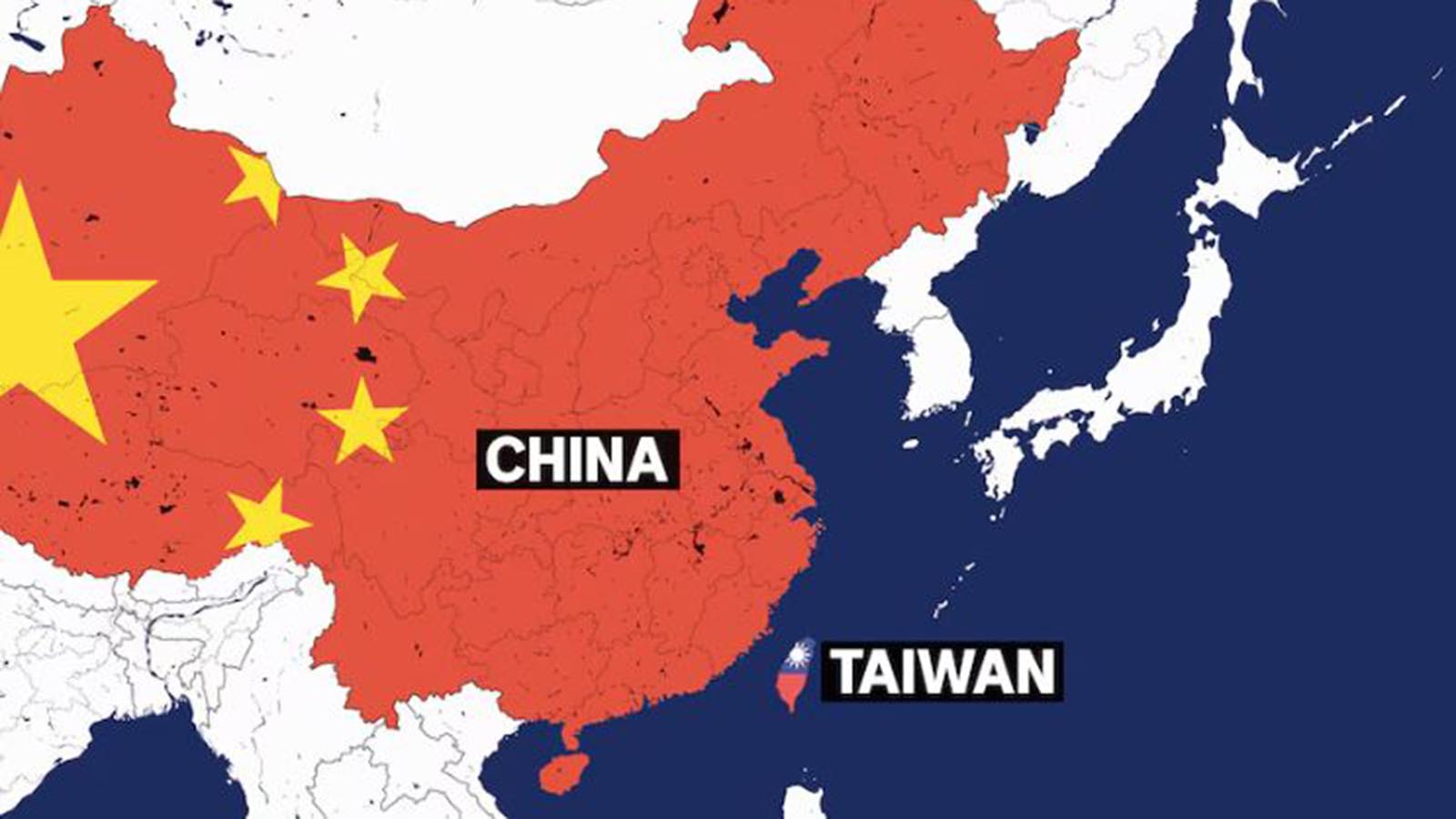
Taiwan’s Foreign Minister, Lin Chia-lung, has accused China of posing the real threat to regional security and of invoking United Nations principles selectively, after remarks by Beijing’s top diplomat at the Munich Security Conference.
The exchange highlights the intensifying war of narratives surrounding Taiwan’s status, sovereignty and the meaning of the post-Second World War settlement in East Asia.
Speaking at the annual security gathering in Germany, China’s Foreign Minister, Wang Yi, warned that unnamed countries were attempting to “split Taiwan from China.” He criticised Japan’s stance on the issue and stressed the importance of upholding the United Nations Charter and the international order established after 1945.
Taipei responded sharply. In a statement issued Sunday, Lin rejected Beijing’s claims and argued that Taiwan’s sovereignty has never belonged to the People’s Republic of China. He said China’s invocation of the U.N. Charter was at odds with its own conduct.
“In fact, China has recently engaged in military provocations in surrounding areas and has repeatedly and openly violated U.N. Charter principles on refraining from the use of force or the threat of force,” Lin said.
The dispute is rooted in fundamentally different interpretations of history. Beijing maintains that Taiwan was returned to Chinese rule at the end of World War Two, following Japan’s defeat in 1945, and that any challenge to this position undermines both Chinese sovereignty and the broader post-war international order.
Taiwan’s government counters that the island was handed over to the Republic of China — the government that later retreated to Taiwan after losing the civil war to Mao Zedong’s communists in 1949 — and not to the People’s Republic of China, which had not yet been established at the time. The Republic of China remains Taiwan’s formal name.
While the dispute has persisted for decades, tensions have sharpened in recent years as China has expanded military activity around the island. The People’s Liberation Army operates near Taiwan on a near-daily basis. In December, it conducted a large-scale round of exercises close to the island, part of a pattern Taipei describes as coercive pressure.
Beijing portrays such operations as legitimate exercises within its own territory. Taiwan views them as intimidation designed to erode morale, test defences and signal resolve to both domestic and international audiences.
The diplomatic exchange in Munich illustrates a broader contest over legitimacy and alignment. Senior Taiwanese officials are not invited to the Munich Security Conference, limiting Taipei’s direct voice at major global security forums. Instead, Taiwan relies on statements and bilateral diplomacy to counter Beijing’s narrative.
For China, Taiwan is framed as a matter of territorial integrity and national unity. For Taiwan’s leadership, it is a question of democratic self-determination. Beneath the rhetorical clash lies a harder strategic reality: rising military capability, deepening geopolitical rivalry and an unresolved sovereignty dispute that remains one of the most volatile flashpoints in Asia.
The confrontation at Munich did not alter positions. But it made clear that both sides are seeking to define not only Taiwan’s status, but also the principles by which regional security is judged.