
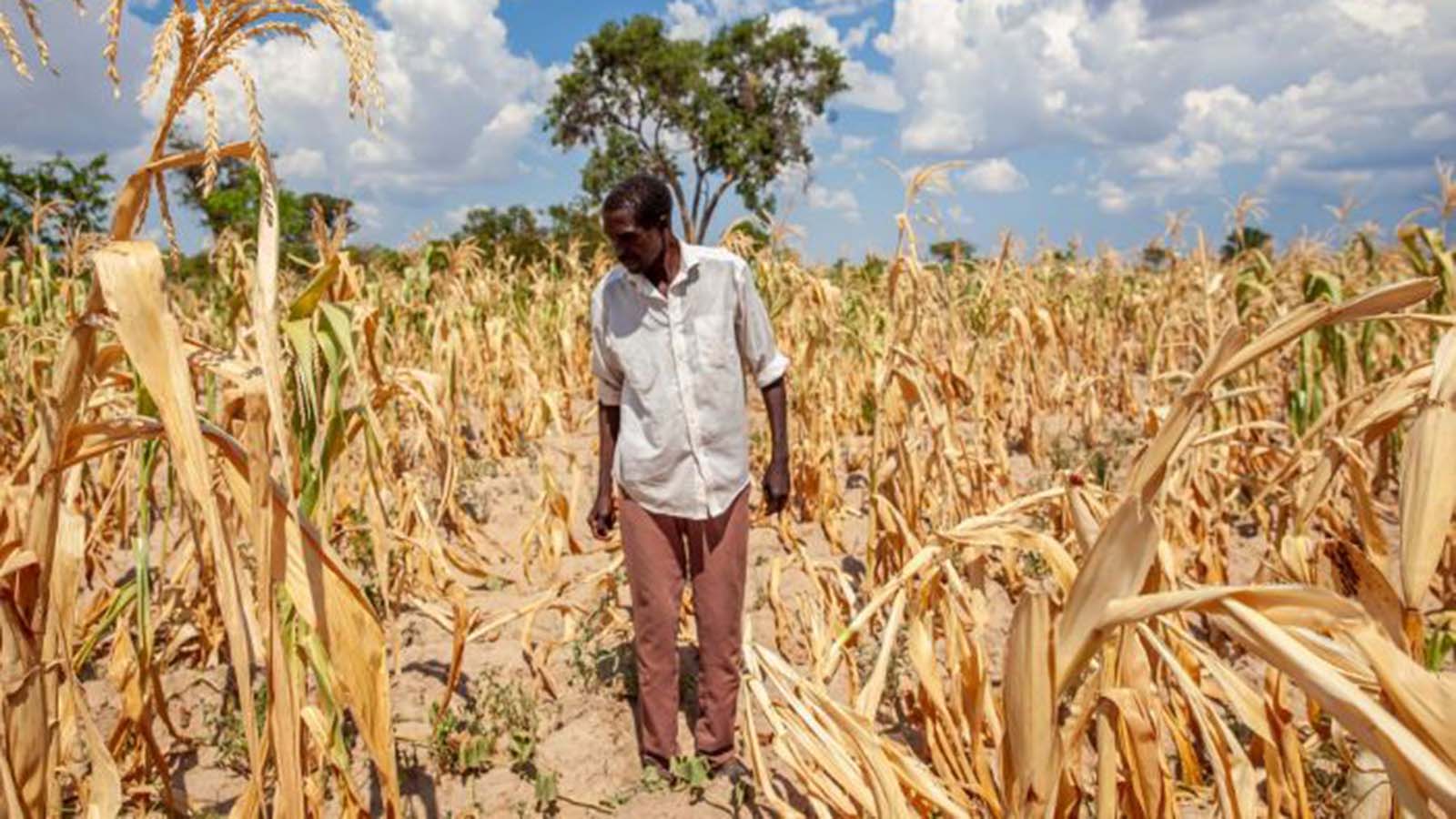
More than 295 million people faced acute hunger in 2025, driven by conflict, displacement, economic shocks and climate extremes. New research suggests that figure may prove a prelude.
A climate-based projection model indicates that by 2100, more than 1.1 billion people could experience at least one episode of severe food insecurity as a direct result of climate change. That total includes both those alive today and future generations. The findings underline how environmental stress, layered onto fragile political and economic systems, may reshape global food security.
The model was built using historical food insecurity data from the Famine Early Warning Systems Network and combined with long-term projections of temperature and rainfall. Monthly climate data from the U.S. National Oceanic and Atmospheric Administration and the Climate Hazards Centre at the University of California were integrated with demographic and economic forecasts. Unlike many previous projections, the model relied primarily on climate indicators rather than detailed household-level socio-economic data, which becomes increasingly uncertain over long time horizons.
Under a high-emissions trajectory, the cumulative exposure to severe food crises could reach 1.16 billion people by the end of the century. More than 600 million of them would be children. Over 200 million newborns could face the risk of acute food insecurity within their first year of life.
The burden will not be evenly distributed. Africa is projected to absorb the sharpest impact. By 2099 alone, more than 170 million people across the continent could face food crises — a number roughly equivalent to the combined populations of Italy, France and Spain today. Regions such as the Horn of Africa and parts of the Sahel are expected to become contiguous hotspots of vulnerability, stretching across millions of square kilometres.
Demography amplifies the risk. Many of the regions forecast to endure the most severe climate stress are also those with strong population growth. As a result, hunger exposure is likely to fall disproportionately on younger populations, with millions encountering their first food crisis before the age of five.
Yet the projections are not fixed outcomes. If global emissions are sharply reduced and development pathways shift toward sustainability, the exposure could be cut by more than half. The model suggests that roughly 780 million people could be spared at least one severe food crisis under a low-emissions, conflict-reducing scenario.
Annual exposure rates could decline significantly as well. The average yearly number of people affected by severe food insecurity, which stood at around 89 million between 2005 and 2015, could fall to approximately 42 million by the end of the century if fossil fuel use is curtailed and green energy expanded.
Africa, while highly exposed, also shows substantial potential for mitigation gains. The modelling indicates that reductions in conflict and emissions could rapidly lower risk levels after 2050. Compared with Asia, African countries may have greater scope to reduce long-term exposure through coordinated policy shifts.
The research underscores a broader point: climate change creates structural risk, but political and economic choices determine the scale of crisis. Food security cannot depend solely on increasing production. Resilient systems must withstand droughts, floods and temperature shocks while ensuring equitable access.
Without decisive global action on emissions and conflict reduction, hunger could become one of the defining humanitarian pressures of this century. The trajectory remains open — but the window for altering it is narrowing.