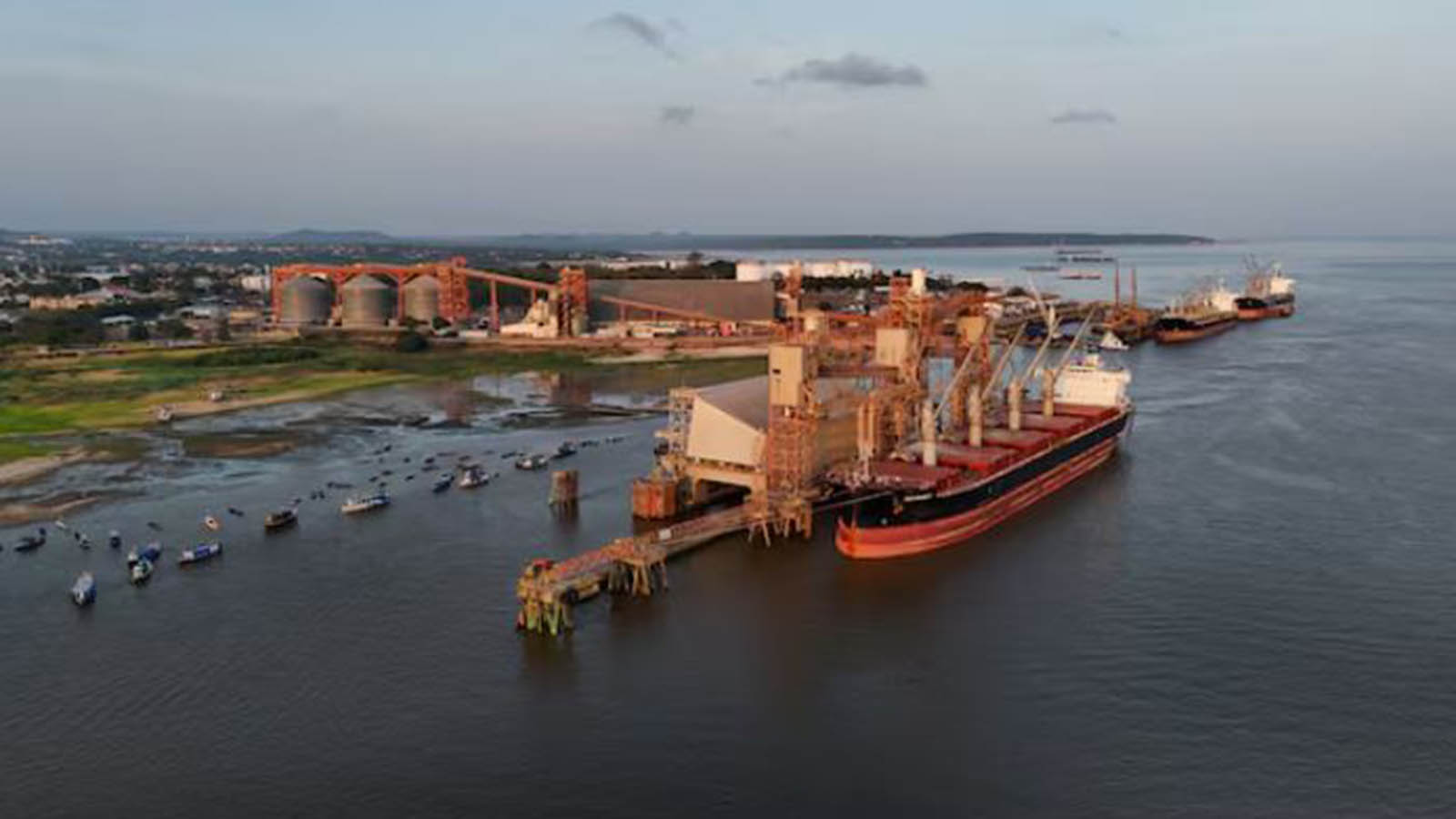
Indigenous protesters in northern Brazil have occupied a shipping terminal operated by U.S. agribusiness giant Cargill, escalating opposition to federal plans to expand port infrastructure and dredge major Amazon waterways.
The takeover took place Saturday at the company’s facility in Santarém, in Pará state, after demonstrators had maintained a protest camp outside the terminal for roughly a month. The occupation led to a suspension of operations.
In a statement, Cargill said activities were halted due to an “ongoing dispute between government authorities and Indigenous communities,” and called for constructive dialogue between the parties.
At the centre of the dispute is a decree signed in August by President Luiz Inacio Lula da Silva, designating several Amazonian rivers as priority corridors for shipping and port development. The policy is intended to facilitate Brazil’s agricultural exports by easing logistical bottlenecks along inland waterways.
Brazil is the world’s largest exporter of soybeans and maize, and river transport plays a growing role in moving grain from interior farming regions to Atlantic ports. Upgrades to river ports and dredging operations are seen by industry as key to improving competitiveness.
Indigenous communities, however, argue that the expansion threatens ecosystems central to their livelihoods. They oppose dredging of rivers such as the Tapajós, a major tributary of the Amazon, citing concerns over pollution, fish stocks and cultural survival.
Alessandra Korap, a leader from the Munduruku Indigenous group, said protesters would remain at the site unless the federal government revoked the decree. “We will only leave if Lula and the government overturn and revoke the decree,” she said.
Environmental and Indigenous activists have broadened the campaign beyond Pará. On Friday, protesters demonstrated outside Cargill’s offices in São Paulo, criticising what they describe as the privatisation of public waterways.
“When they start dredging the river and causing pollution, the river will cease to be a common good for all humanity and will become the property of a single individual,” said protester Thiago Guarani.
Two weeks earlier, the federal government announced a suspension of dredging activities in the Tapajós River following Indigenous-led protests. The pause has not resolved tensions over the broader development strategy.
The confrontation reflects a longstanding tension in Brazil between economic expansion and environmental protection in the Amazon basin. For agribusiness exporters and logistics firms, improved river transport reduces costs and reliance on road networks. For Indigenous groups, waterways are integral to subsistence fishing, transportation and spiritual traditions.
With operations at the Santarém terminal disrupted, the dispute now tests the government’s ability to balance export-driven growth with constitutional protections for Indigenous territories. Whether dialogue can defuse the occupation remains uncertain as both sides frame the issue as fundamental to their interests.