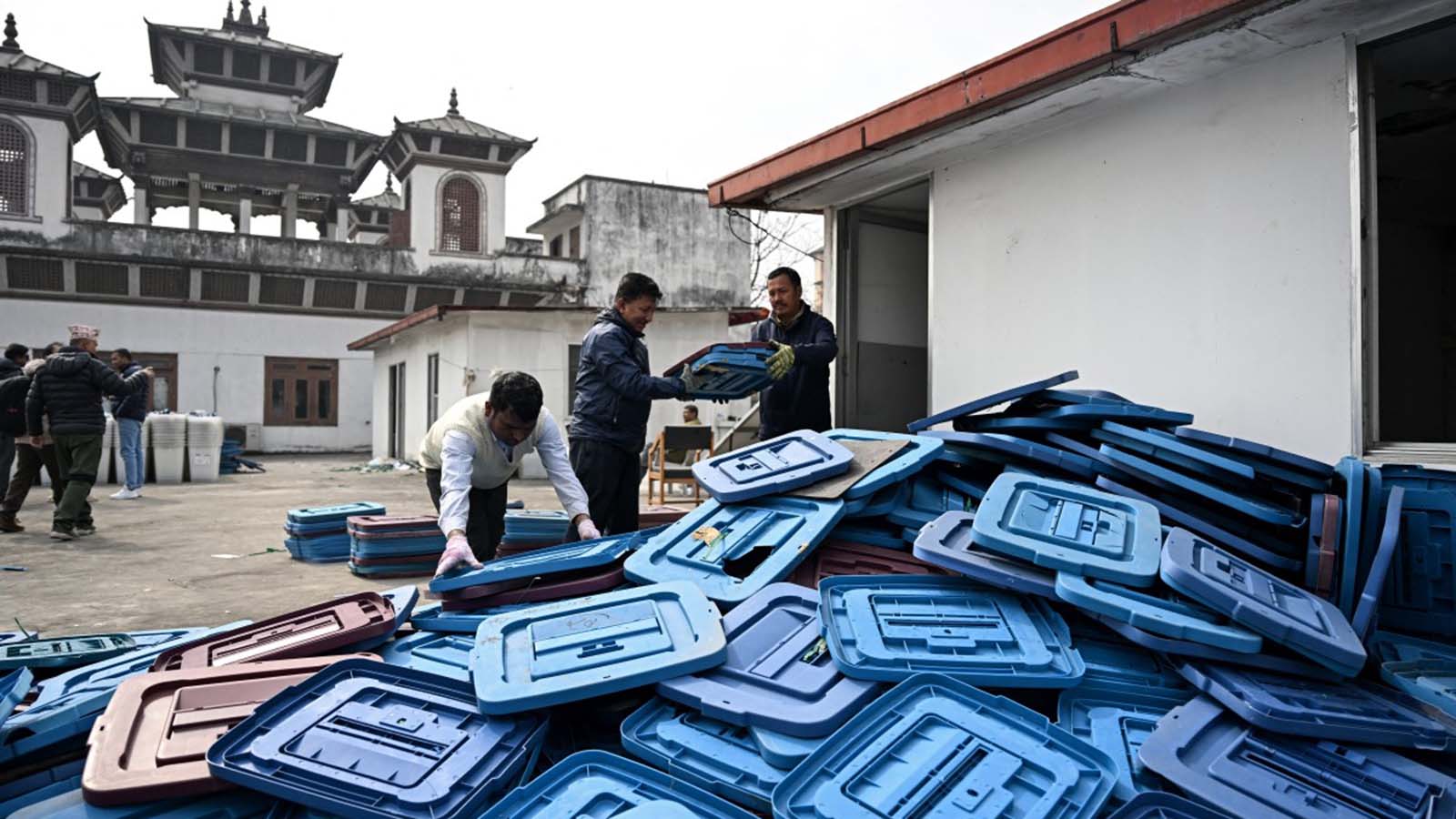
Nepal votes on March 5 in its first election since deadly anti-corruption protests toppled the government, but analysts say the outcome is unlikely to dramatically alter the country’s careful balancing between India and China.
The Himalayan nation of 30 million heads to the polls six months after youth-led demonstrations forced out the administration of former prime minister KP Sharma Oli. The unrest, initially triggered by anger over a brief social media ban, widened into broader protests over corruption, economic stagnation and entrenched political elites. Seventy-seven people were killed over two days of clashes.
Oli, 74, is seeking a political comeback. But observers expect a fragmented parliament, making coalition negotiations decisive in shaping the next government.
“It will be very difficult for any single party to secure a majority,” said journalist Sudheer Sharma. “The fundamentals of Nepal’s relations with India and China will not change, but some approaches might.”
Landlocked Nepal sits between Asia’s two rising powers and has long pursued a pragmatic foreign policy to avoid overdependence on either side.
India remains Nepal’s largest trading partner, accounting for roughly 63 percent of imports, valued at $8.6 billion, according to World Bank data. China ranks second at 13 percent, or $1.8 billion. Open borders with India facilitate deep economic and cultural ties, while China has expanded infrastructure investment through its Belt and Road Initiative.
Retired Indian diplomat Rakesh Sood describes bilateral ties as extensive, spanning trade, hydropower, tourism and cross-border connectivity. Nepal exports electricity generated by its rivers to India, while Chinese-backed projects link Kathmandu to Tibet via roads, airports and planned railways.
Oli’s previous tenure strained relations with New Delhi. After returning to office in 2024, he chose Beijing for his first foreign visit, breaking with the long-standing tradition of prioritising India. That decision fed perceptions that Nepal’s left-leaning leadership was tilting northward.
South Asia analyst Michael Kugelman said such swings are more about tone than substance.
“Nepal’s leadership, even if at times seemingly inclined to lean toward one power or the other, aims to balance ties with India and China,” he said. “It’s hard to imagine that changing.”
A new generation of candidates, many emerging from the Gen Z-driven protest movement, are campaigning on economic reform and political renewal. Their focus is domestic — jobs, transparency and growth — rather than foreign policy realignment.
Analysts say China is likely comfortable with any political configuration in Kathmandu that remains open to economic engagement. India, for its part, continues to support electoral logistics, including providing vehicles to assist Nepal’s Election Commission.
The greater uncertainty may lie not in geopolitics but governance. If younger leaders secure influence within coalition arrangements, they could push for stricter oversight of infrastructure deals and foreign investment, potentially reshaping how projects are negotiated rather than which partners are prioritised.
“Young people in Nepal won’t support opaque funding or political interference,” Kugelman said. “But that doesn’t mean they will reject engagement with either neighbour.”
As ballots are cast next week, Nepal’s political landscape may shift. Its foreign policy posture, however, is expected to remain anchored in cautious equilibrium — navigating between two giants while trying to steady its own economy at home.