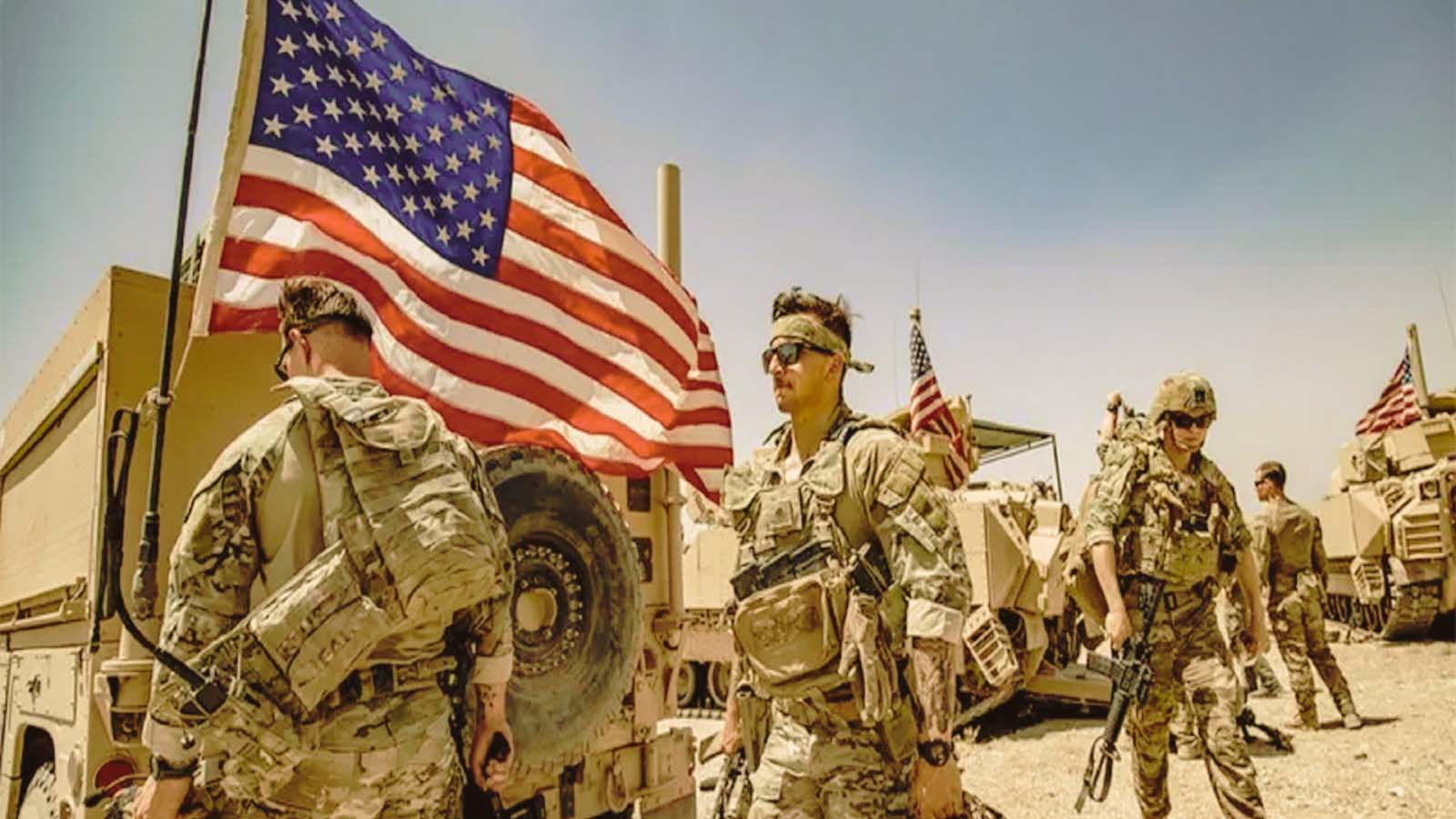
As President Donald Trump weighs potential strikes against Iran, the United States is assembling a formidable array of military assets across the Middle East and parts of Europe.
Aircraft carriers, missile defence systems and combat aircraft are being repositioned. Yet behind the visible show of force lies a quieter debate inside Washington: how much risk the United States is prepared to accept.
The administration’s public posture suggests confidence. Trump has pointed to what he views as recent, swift operations — including last year’s strikes on Iranian facilities and a rapid intervention in Venezuela — as proof that calibrated force can achieve political ends at limited cost. But senior military planners are reportedly cautioning that Iran presents a far more complex challenge.
Despite damage sustained in prior confrontations, Tehran retains significant retaliatory capabilities. It can target U.S. forces and bases across the Gulf, disrupt maritime traffic in the Strait of Hormuz, and deploy missile and drone assets against regional partners. It also maintains networks capable of asymmetric operations beyond the immediate theatre.
The risk calculus changes further given Trump’s rhetoric. Repeated suggestions of regime change reduce the likelihood that Iran would exercise restraint in the face of limited strikes. For Tehran, survival would eclipse caution.
Tensions between civilian leadership and military command are not new in American history. During the 1990s, disputes between the Clinton administration and the Pentagon over interventions in Somalia and the Balkans revolved around similar questions: how to reconcile political objectives with operational risk. Then–Joint Chiefs Chairman Colin Powell argued that force should not be used without clear objectives and public support, warning against incremental escalation.
Today’s debate echoes that pattern. Reports suggest Trump is pressing advisers for options that would deliver visible impact without entangling the U.S. in prolonged conflict. Yet military planners caution that no strike option is cost-free. Any sustained campaign would invite retaliation.
A second constraint is logistical rather than strategic. Years of supplying air defence systems and precision munitions to partners such as Ukraine, Israel and Taiwan have depleted U.S. stockpiles of critical missile interceptors. Systems like THAAD and Patriot batteries — essential for defending bases and allies against Iranian missiles — are in finite supply. Naval forces have also drawn down inventories of SM-2, SM-3 and SM-6 missiles used to shield carrier groups.
A short, limited strike may be manageable. A prolonged exchange could stretch resources thin, forcing the Pentagon to reallocate assets from Europe or the Indo-Pacific. Replenishing high-end missile stocks is neither immediate nor inexpensive; production timelines extend months or even years.
This reality complicates the president’s political positioning. Trump campaigned on avoiding open-ended foreign conflicts and prioritising domestic strength. A conflict that expands beyond its initial scope would test both promises.
Strategically, Washington faces a narrowing set of choices. A show of force without follow-through risks appearing hollow. Action carries escalation risks that could ripple across energy markets, alliance politics and domestic opinion ahead of U.S. elections.
Whether the administration ultimately chooses diplomacy or force, the internal friction between ambition and capacity is likely to intensify. Military planners understand that even carefully calibrated operations can trigger unintended consequences. The decision now before the White House is not merely tactical — it is a wager on how much volatility the United States is prepared to absorb.
If strikes proceed despite warnings, the geopolitical consequences will extend well beyond the initial target list. And as history has repeatedly shown, wars rarely unfold as neatly as they are conceived.