India’s relationship with Israel has transformed dramatically over the last decade, evolving from a cautious, limited engagement into one of its most strategically significant partnerships. This shift has accelerated under Narendra Modi, whose government has pursued deeper ties with Israel even as historic support for the Palestinian cause has receded in practice.
A historic pivot from non-alignment
For most of the post-colonial period, New Delhi framed itself as a champion of anti-colonial and non-aligned diplomacy, especially in support of Palestinian self-determination. India opposed the 1947 UN partition plan for Palestine and was one of the first non-Arab states to formally recognise the Palestinian Liberation Organization.
Diplomatic relations with Israel were only established in 1992, after the Cold War shifted global alignments. Even then, relations were gradual and weighed against India’s ties to Arab states and broader public sympathy for the Palestinian people.
Under Modi’s rise to power in 2014, however, a deeper political and strategic alignment began to take shape — breaking with decades of cautious, reactive policy.
Strategic drivers of the ‘Special Relationship’
Several forces have driven the shift:
- Shared security and defence interests: India and Israel have built extensive defence cooperation, with India becoming one of Israel’s largest buyers of military hardware. Tel Aviv’s expertise in drones, air defence systems, surveillance technology and counter-terrorism training has been attractive to India’s security establishment.
- Converging views on terrorism: Both governments view Islamist militancy as a primary security threat. This convergence — particularly around counter-terror strategies — has helped bridge what were once sensitive diplomatic gaps and fostered closer military cooperation.
- Economic and technological cooperation: Beyond defence, ties now extend to high-tech innovation, agriculture, water management, and space technologies. The bilateral trade relationship, once modest, has grown into a multi-billion-dollar partnership with robust annual growth preceding and during the 2020s.
- Regional geopolitics and new alliances: The rise of multilateral groupings such as the I2U2 Group — linking India, Israel, the United States and the United Arab Emirates — reflects broader geostrategic realignments in West Asia as traditional U.S. dominance recalibrates.
Modi’s personal diplomacy and political calculus
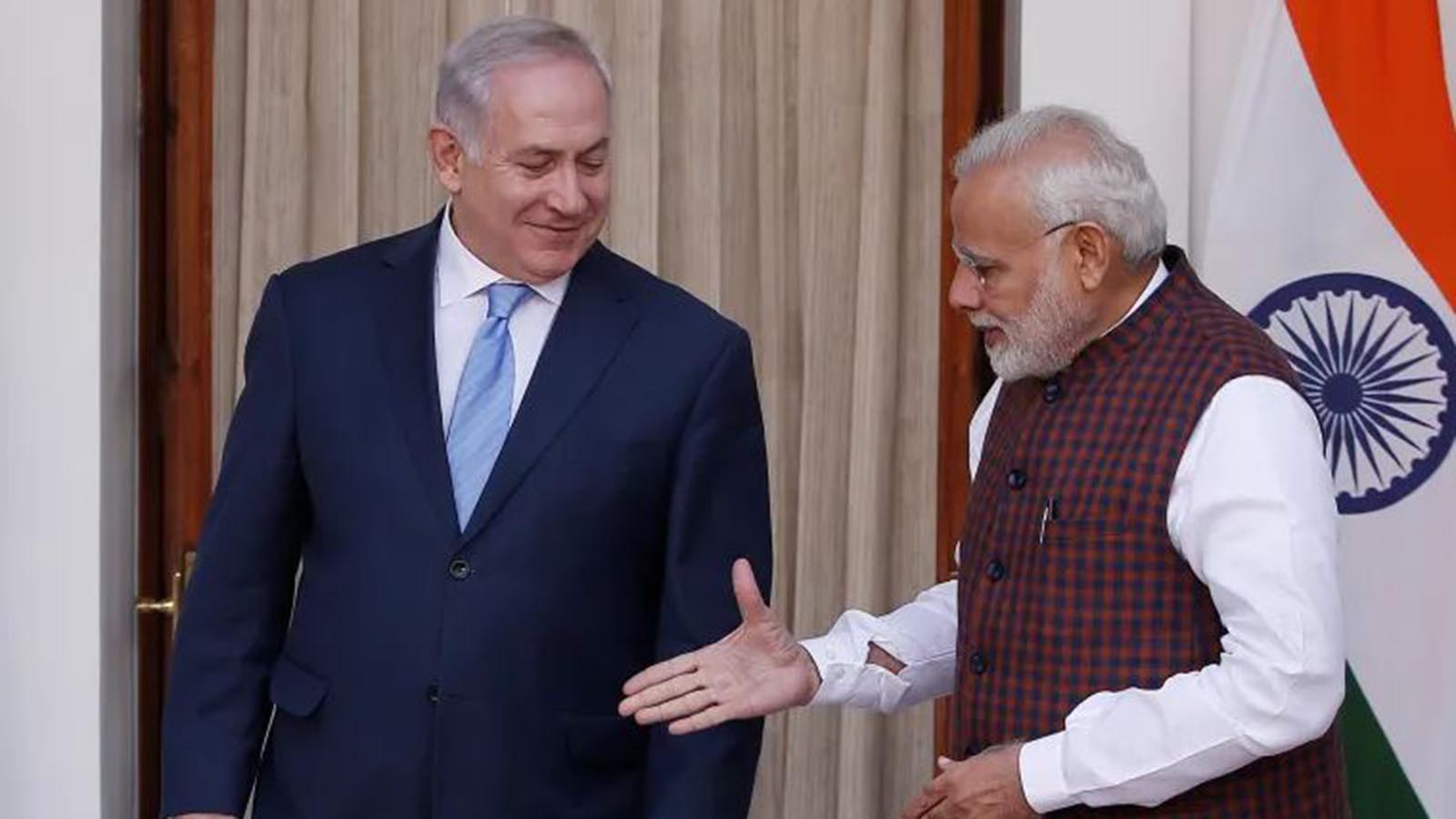
Under Modi, the relationship has transcended formal cooperation into personal diplomatic warmth. Leaders of both countries refer to each other as close friends, and high-profile visits have underscored this intimacy.
Critics argue that accommodating Israel so publicly — especially amid its highly controversial conduct in Israel–Gaza conflict— has come at the expense of India’s moral standing on the Palestinian question. Some analysts see Modi’s embrace of Israel as diminishing India’s historic role as a moral voice in the Global South
While New Delhi continues to publicly endorse a two-state solution, it has been markedly more cautious in condemning Israeli military actions or aligning with Arab nation critiques. This restraint has drawn sharp reaction from some domestic and international commentators who argue India’s approach undermines its traditional advocacy for Palestinian rights.
Balancing act and future prospects
India’s foreign policymakers describe the relationship with Israel as “pragmatic”— not ideological — rooted in national interest rather than alliance politics. That framing allows New Delhi to pursue deeper cooperation with Israel while maintaining ties with Arab states and other partners in the wider Middle East.
But the policy carries political risks. Strong ties with Israel are scrutinised domestically, particularly among Muslims and civil society groups who continue to view the Palestinian struggle as integral to India’s own history of anti-colonial solidarity.
As India expands its diplomatic footprint across West Asia and beyond, the evolution of its relationship with Israel — once improbable and now strategic — may continue to redefine its global posture, balancing economic, security and political imperatives in an increasingly complex geopolitical landscape.