Sudan’s Army Built New Militias to Beat the RSF. Civilians Fear It Is Building the Next One.
Three years into a civil war that began when the Rapid Support Forces (RSF) turned its guns on the Sudanese state that had armed it, the army now finds itself repeating the same wager: outsourcing combat power to militias it cannot fully control, in cities where residents already suspect they are watching the next rupture take shape in slow motion.
In Port Sudan, Khartoum and Wad Madani — the seats of what remains of state authority under army chief Abdel Fattah al-Burhan — fighters from at least three major armed groups move openly through markets and checkpoints, despite formal bans on carrying weapons in public. Civilians describe the atmosphere in strikingly similar terms across cities: familiar, tense, and reminiscent of the conditions that preceded the RSF’s 2023 break with the army, a conflict that has since killed more than 200,000 people by some estimates.
A Structural Pattern, Not a One-Off Betrayal
The RSF’s turn against the state is often narrated as a singular betrayal — the ambition of one commander, Mohamed Hamdan Daglo, known as Hemeti, outgrowing his patron. The longer history suggests something more structural. Sudan’s army has for decades resolved its manpower and legitimacy problems by arming irregular forces in its peripheries, beginning with the Janjaweed militias that Omar al-Bashir mobilized against Darfuri rebels in the 2000s — killings that left more than 300,000 dead and that Bashir later formalized into the RSF itself in 2013, in part as a personal protection force.
That force then became the instrument of his downfall: Hemeti’s RSF helped topple Bashir during the 2018–19 uprising, becoming indispensable to Burhan in the process. Burhan’s own insistence, as recently as a year before war broke out, that conflict between him and Hemeti was “impossible, utterly impossible” now reads less as prediction than as a template of denial — one that current statements from Burhan’s lieutenants about militia “integration” into the army may be repeating.
Three Armies Within an Army
The coalition now fighting alongside Burhan’s forces is not a single reliable partner but a set of groups with divergent origins, loyalties, and records:
The Joint Forces, a coalition of former Darfuri rebel factions, is led by two men who now hold formal positions in Burhan’s government — Darfur governor Minni Minawi and finance minister Gibril Ibrahim. Both spent years in rebellion against Khartoum before the war realigned them as allies against a common enemy. Sudanese analyst Kholood Khair described the Joint Forces as the group a Sudanese diplomat called “the next Hemeti” — a coalition whose loyalty to the state is transactional rather than structural.
The Sudan Shield Forces, which defected from the RSF, now controls Al-Jazira state under commander Abu Aqla Kaykal — a figure whose fighters besieged and burned villages while conquering the state for the RSF, and who, after switching sides in 2024, is accused of carrying out ethnic massacres against villagers suspected of RSF collaboration. Khair identified Kaykal as the most dangerous of Burhan’s potential future rivals, warning that his growing visibility alongside Burhan may be emboldening him against Minawi. A local activist described Kaykal as attempting to “whitewash the crimes he committed with the RSF” while consolidating what she called his own fiefdom.
The Baraa ibn Malek Brigade, an Iran-linked Islamist force considered the armed wing of Bashir-era Islamists, has drawn US and Saudi pressure on Burhan to distance himself from it — pressure he has so far only partially heeded, according to residents who report the group’s fighters still stopping vehicles and moving armed through Khartoum’s outskirts in civilian clothes.
Why Integration Talks Keep Stalling
The pattern connecting all three groups is the same one that preceded the RSF’s break with the state: militias accumulate territory, weapons and revenue faster than any negotiated framework can absorb them into a unified command. Burhan has ordered armed groups to leave Khartoum after retaking it from the RSF last year; none have fully complied. His lieutenants have floated integration into the regular army; none of the groups have signaled they intend to do so soon.
That stalemate directly echoes the breakdown in RSF-army integration talks that preceded the 2023 war — a breakdown a diplomat in Sudan described in blunter terms, characterizing the current militias as mercenaries who would abandon the state the moment they felt “short-changed.”
The View From the Street
For civilians, the analytical distinctions between coalition partners collapse into a single, recurring anxiety. A 30-year-old writer in Khartoum described the situation as a scenario “we’ve seen… over and over,” while a 50-year-old father in the capital noted that formal weapons bans have done little to keep militiamen out of public life. In Al-Jazira, residents describe living under a force that “acts like [the state] is theirs,” according to one activist — an echo of the same territorial behavior the RSF exhibited before its formal break with Khartoum.
An accountant in Khartoum captured the ambient tension in physical terms, describing militiamen who “walk around with their chests puffed out, like they’re looking for trouble” — a signal, in a city that has already lived through one militia’s turn against the state, that residents are watching for the same warning signs a second time.
The Underlying Question
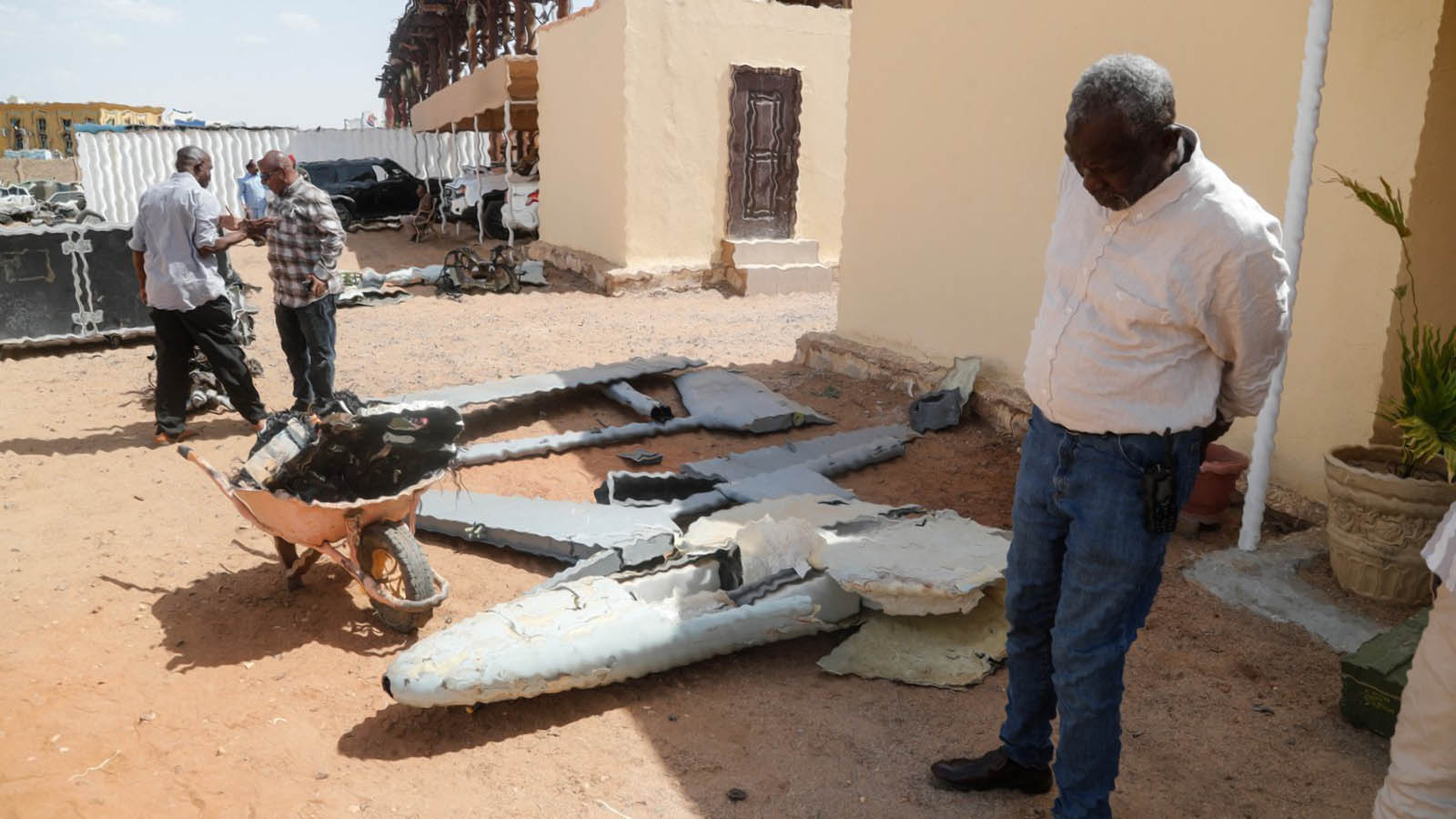
What distinguishes this moment from 2023 is not the dynamic — army empowers militia, militia outgrows its usefulness as a subordinate, militia’s territorial and financial interests diverge from the state’s — but the number of actors now positioned to repeat it simultaneously. Where the RSF was once the exception, Sudan’s army now depends on multiple militias with independent arsenals, anti-aircraft capability, and drone warfare capacity, each with its own grievances, ethnic constituencies, and record of documented atrocities.
Whether Burhan can manage three armed coalitions where he failed to manage one may determine less whether war returns to Sudan than which militia commander becomes the next Hemeti — and how many more cycles of the same arrangement Sudanese civilians are asked to survive before it does.