
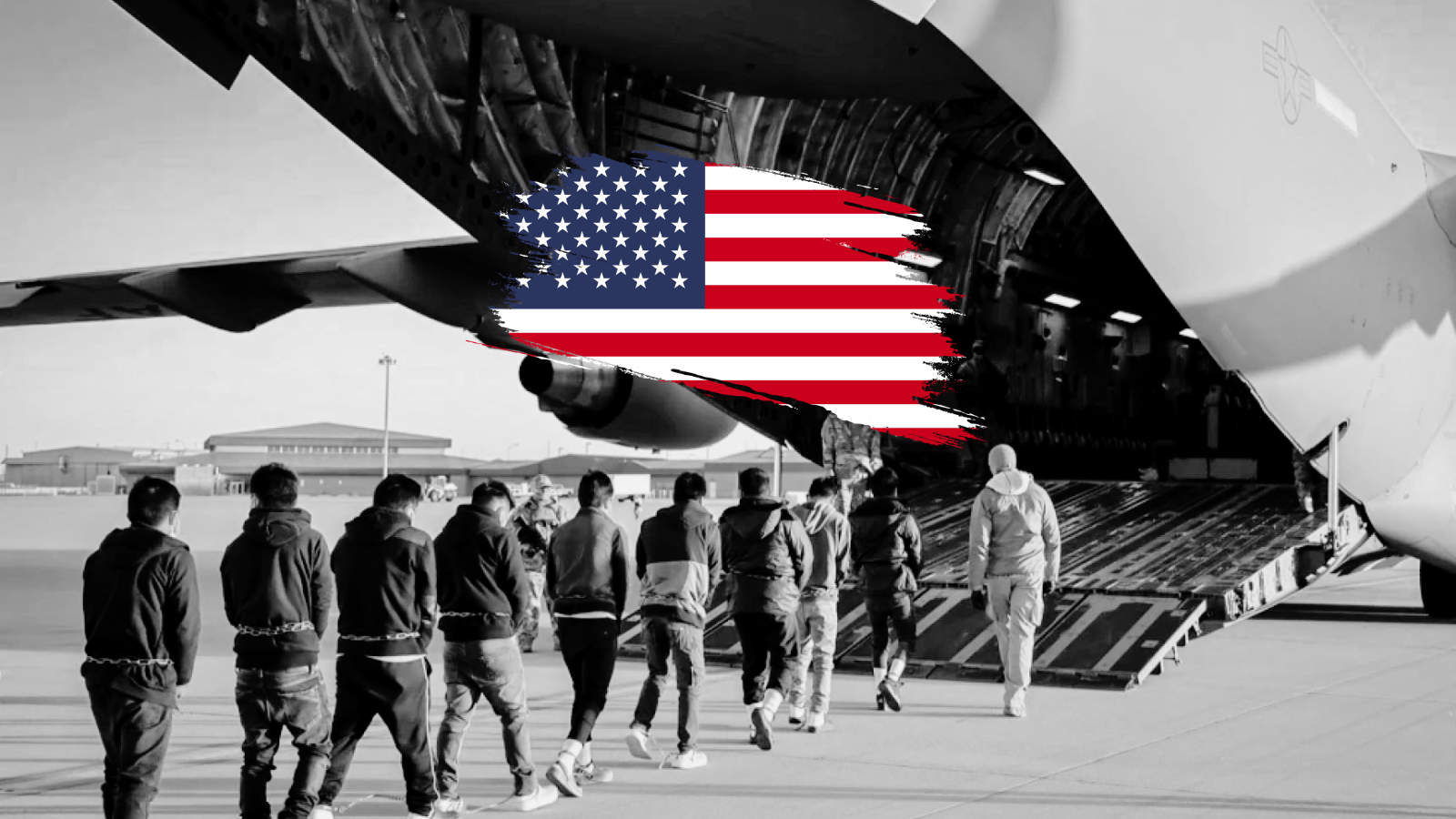
A pattern has emerged over the past year that goes well beyond routine immigration enforcement: the Trump administration has been pairing visa restrictions with financial incentives to persuade African governments to accept deportees who have no citizenship, family ties, or legal standing in those countries. According to AFP interviews with two former State Department officials, immigration lawyers, and deportees themselves, the practice has evolved into a systematic — if largely undisclosed — diplomatic tool.
From Central America to Africa: A Second Wave
The strategy did not begin in Africa. Earlier in Trump’s second term, asylum seekers were routed to Panama, and Venezuelan nationals accused of gang ties — often on thin evidence — were sent to El Salvador’s maximum-security CECOT facility. Africa represents an expansion of that model, according to the reporting, with Washington now combining the threat of travel bans with multimillion-dollar payments to secure deportation agreements.
Eswatini has reportedly agreed to accept 160 deportees in exchange for $5.1 million, while Rwanda is said to have struck a roughly $7.5 million arrangement covering 250 people, according to Human Rights Watch figures cited in the report. One US-based immigration lawyer described the arrangement as a form of state-sanctioned trafficking in human beings.
Why This Matters: Legal Protections Being Circumvented
What distinguishes this wave from earlier deportation efforts is the population being targeted. Many deportees held Convention Against Torture protections or “withholding of removal” status — legal safeguards that, until now, generally allowed people to remain and work in the US despite an outstanding deportation order. The administration’s legal argument is narrow but consequential: those protections only bar return to a person’s country of origin, not to any third country. That reading has opened the door to sending protected individuals to nations where they have never set foot.
Immigration attorneys interviewed said they had not anticipated this outcome for their clients, several of whom have since been dispersed to South Sudan, Eswatini, Cameroon and the Democratic Republic of Congo. One attorney characterized these clients as being viewed by immigration enforcement as easy cases to process logistically, given the absence of legal barriers to removal.
The Human Toll: Detention Without Charge
Several individual cases illustrate the on-the-ground consequences:
- A Cambodian man who had completed a 15-year US prison sentence was deported not to Cambodia but to Eswatini, where he was held for months in a maximum-security prison without charge, before eventually returning to Phnom Penh.
- A Cuban-born Florida plumber, previously supportive of Trump, was deported despite his decades in the US and was misidentified by a DHS spokesperson as a “murderer.” He remains in the same Eswatini prison roughly a year later.
- A man who fled torture in East Africa was deported to Equatorial Guinea, where authorities do not recognize asylum claims; when he was subsequently flown to his home country, border officials turned him back for lack of documents, leaving him effectively stranded.
- Deportees sent to Ghana were reportedly held at a remote military base without charges, with some later driven across the border and left in Togo without identification papers.
Lawyers describe these situations as a “legal black hole” — a term used repeatedly in the reporting to characterize indefinite detention with little to no access to counsel, even where local courts have ruled that detainees are entitled to legal representation.
The Diplomatic Mechanics: Carrots, Sticks, and Holdouts
The pressure campaign has not been uniform. Ghana’s decision to accept West African deportees was followed by the reversal of US visa restrictions and the lifting of a 15 percent tariff on its cocoa and agricultural exports — illustrating the transactional nature of the arrangement. Equatorial Guinea, by contrast, accepted deportees but remains under a travel ban regardless.
Not every country has cooperated. Burkina Faso’s military government has refused to accept deportees, with its foreign minister publicly questioning whether the visa freeze amounted to coercion. The country was subsequently hit with a travel ban. Nigeria reportedly faced new visa restrictions after declining to accept Venezuelan nationals.
By one Senate Democratic count, at least nine African governments have taken or agreed to take deportees, representing roughly a third to nearly half of the 25-plus third-country agreements struck globally — a disproportionate share landing on the continent given the far larger number of countries worldwide.
Open Questions
The reporting raises several unresolved issues that are likely to shape how this story develops:
- Legal accountability: Attorneys argue the arrangement amounts to “chain refoulement” — using intermediary countries to accomplish removals the US could not lawfully carry out directly. Whether this theory gains traction in US courts remains untested at scale.
- Oversight of intermediaries: The International Organization for Migration’s role in encouraging “voluntary” return of deportees from countries like the DR Congo and Cameroon has drawn criticism from lawyers, even as the IOM maintains its assistance is voluntary and based on informed consent.
- Transparency: The secrecy surrounding the number of deportees and the destination countries makes independent verification difficult, and Congress’s own tally is described as incomplete — it does not yet include newer arrangements with Sierra Leone or the Central African Republic.
- High-profile test cases: The prospect that Kilmar Abrego Garcia — already at the center of a prior deportation controversy — could be sent to Uganda, Eswatini, Ghana or Liberia suggests this policy may face fresh legal and political scrutiny in the months ahead.
Analysis based on AFP field reporting, court filings, and interviews with US officials, immigration attorneys, and deportees conducted over the past year.
Project contentCrisisWireCreated by youAdd PDFs, documents, or other text to reference in this project.